Power restored through nationwide teamwork, from far north to deep south
In October, a severe windstorm tore through the South Island. A coordinated response between lines companies — from the far north to the deep south — highlighted the electricity distribution industry’s commitment to helping communities during one of the year’s most damaging weather events.
In PowerNet’s region alone — which serves power to the very bottom of the South Island — about 50,000 customers lost power. Numbers dropped quickly as restoration began, but some households remained without electricity for two weeks, showing just how severe the storm was.
As crews got to work, support didn’t just come from local teams. Field staff, equipment and specialist expertise flew in from across Aotearoa — from TOP Energy in the far north to neighbouring contracting service providers, like Unison Contracting who work on the Aurora Energy network.
Electricity Networks Aotearoa Chief Executive, Tracey Kai, says the October storms clearly demonstrated the strength of the sector.
“When a major storm hits, lines companies don’t think in geographic boundaries. They think about what communities need and how they can support colleagues to restore power quickly and safely,” says Kai.
In Southland and Otago, where states of emergency were declared, PowerNet activated its emergency response quickly and received offers of support from lines companies throughout the country. Crews rolled in within days, and those without power were reconnected much faster than any one network could manage alone.
PowerNet Chief Executive, Paul Blue, says welcoming additional crews was straightforward.
“In many cases, we’d worked with these crews before, because it’s not just during emergency responses that we keep in touch and collaborate, but during our day-to-day business, too,” says Blue.
Unison Contracting Services Interim GM, Contracted Network Services, Mark Lawrie, says they were proud to support neighbouring networks during the recent storm.
“Our Dunedin crews joined other networks on the ground, restoring power to communities across Southland and Otago, while a small team was deployed to Mid Canterbury after attending the Annual Connections Competition,” says Lawrie. “This highlights the strong collaboration within our industry of working together to enable networks to restore power and reconnect communities when severe weather strikes.”
Of course, it’s not just field crews needed in a crisis. TOP Energy, which delivers power to the far north, sent reinforcements for PowerNet’s system control room, where operators review the network, assess damage, direct fault crews and prioritise areas of greatest need.
TOP Energy Chief Executive, Russell Shaw, says at the end of the day, every lines company in New Zealand is trying to do the same thing, and that is keep the lights on for the communities we serve. That shared purpose is why people are so quick to jump in and help when we put the call out.
“Those offers of help don’t come out of nowhere. They’re built on long-standing relationships across the industry and a lot of quiet work in the background and picking up the phone when someone else has been through a similar event,” says Shaw.
WEL Networks Chief Executive Garth Dibley says severe weather events remind us that the electricity industry is built on collaboration, not competition.
“When the call came through, our team didn’t hesitate. Our Annual Connection line mechanic team were proud to join MainPower in North Canterbury to help restore thousands of connections as quickly and safely as possible. Working side by side with other lines companies reinforces the strength of our shared commitment to keeping communities connected.
“It wasn’t just boots on the ground – our Network Operations HV Planner also supported PowerNet’s control room during the emergency response. Providing technical expertise and planning assistance ensured crews could work efficiently and safely in challenging conditions. At WEL, we believe that when the lights go out, we all step up together. That spirit of teamwork is what keeps Aotearoa powered through even the toughest storms.”
While the storm was unusually severe, the cause of many outages was unsurprising. PowerNet estimates around 95% of its outages — affecting more than 23,000 customers — were caused by falling trees.
The same pattern emerged in North Canterbury. After the windstorm, MainPower lost 8,000 connections, with around 90% of outages caused by trees and vegetation. Much of this damage came from ‘fall zone’ trees — which are those outside the areas where lines companies have legal authority to trim or remove them.
MainPower received support from crews at WEL, Waipā and Unison networks to restore these 8,000 connections as quickly and safely as possible.
Kai says ENA and lines companies have been calling for changes to outdated tree legislation for more than a decade.
“Yes, during a storm lines companies come together to get power restored as quickly as possible. But outdated tree laws make it harder to manage the risks — which ultimately makes power less reliable and more expensive for customers.
“We’re often asked for examples of how lines companies work together. Major outage events show this in the field — but the collaboration happens behind the scenes every day as well,” says Kai.
Across the motu, lines company staff share what’s working, swap resources and processes, and support each other on common challenges. From regulatory specialists and pricing teams through to HR managers and those working to reduce energy hardship, the sector is constantly working together to deliver better outcomes for customers.
ENDS
Key stats and information from the October severe weather event in Southland (PowerNet's region):
The storm hit Southland approx 11.45am 23 October 2025. By 5pm:
- 35 of 35 Zone Substations in Southland were off
- 17 of 18 Zone Substations in South Otago (Clutha) were off (2 ICPs still on)
By day 5, the number of teams working on Southland & South Otago networks increased from 25 to 70.
Four former PowerNet staff joined System Control from other networks in New Zealand.
Total customers on PowerNet’s networks: 78,000.
Estimated customers without power by the end of each day:
- Day 1: 25,000
- Day 3: 15,000
- Day 7: 4,000
- Day 11: 1,600
Thousands of windthrown trees!
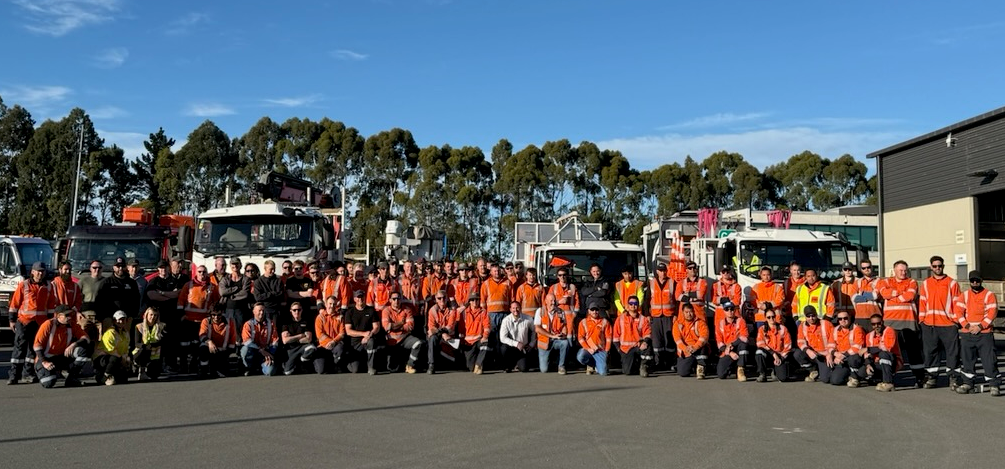
Full team assistance photo from MainPower
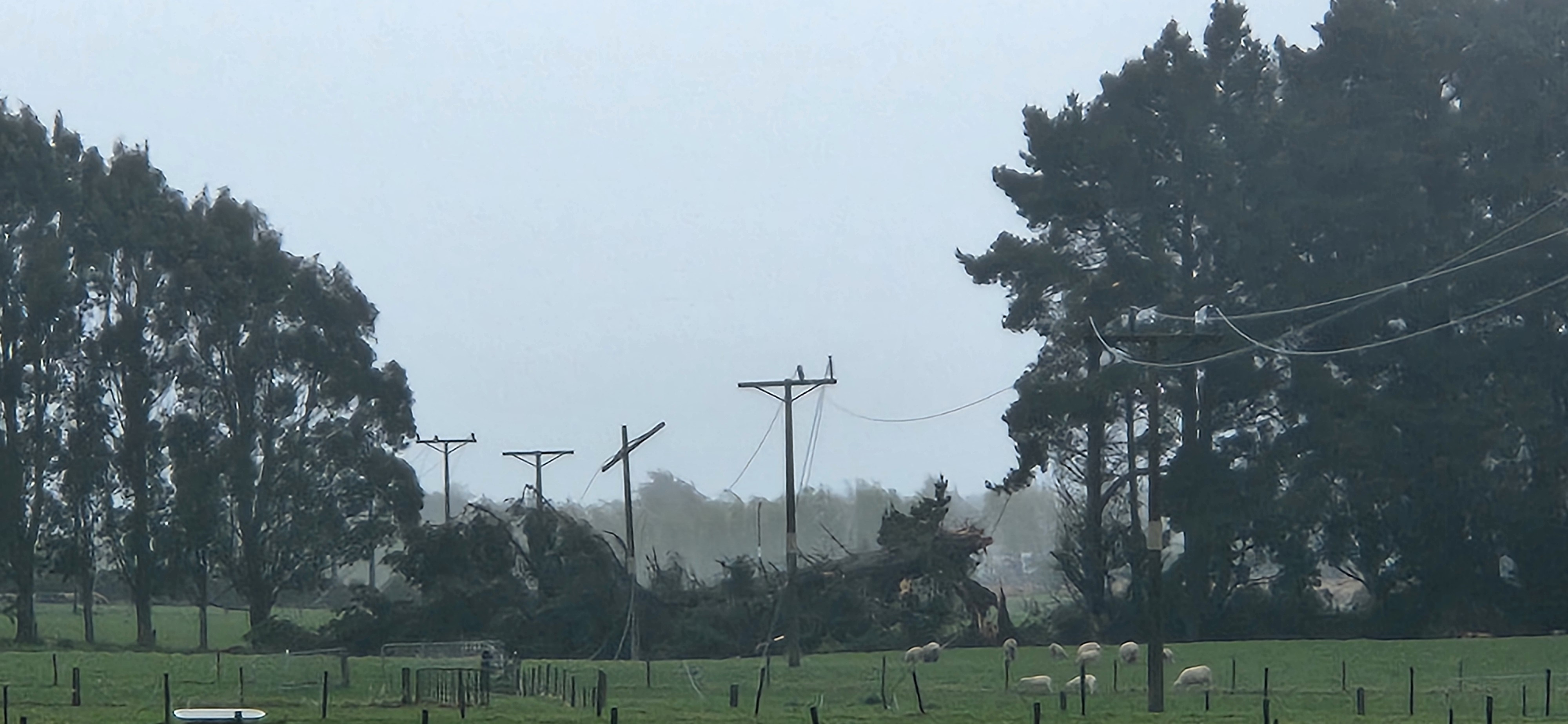
Tress take down lines
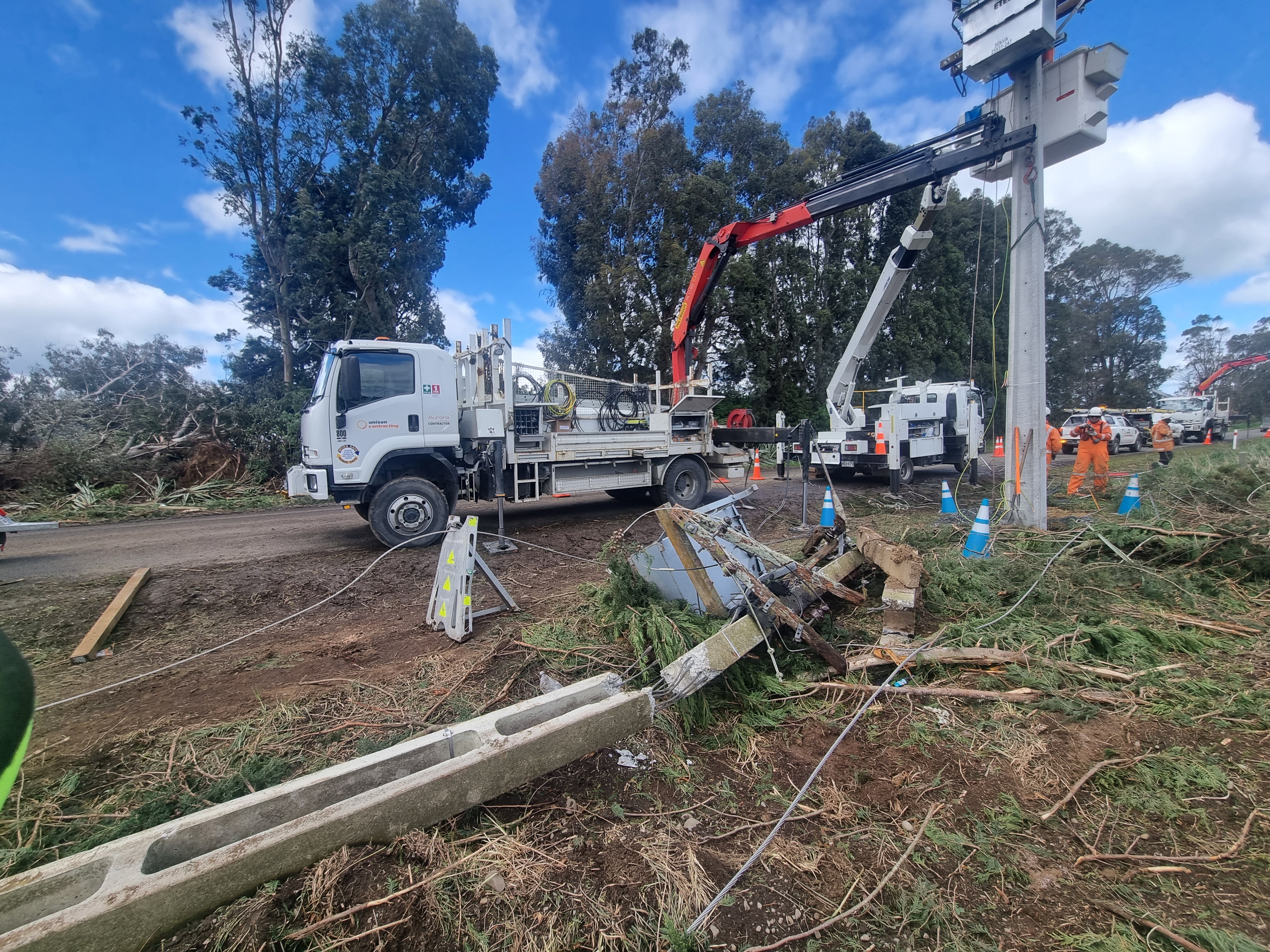
Working together to restore power in the deep South
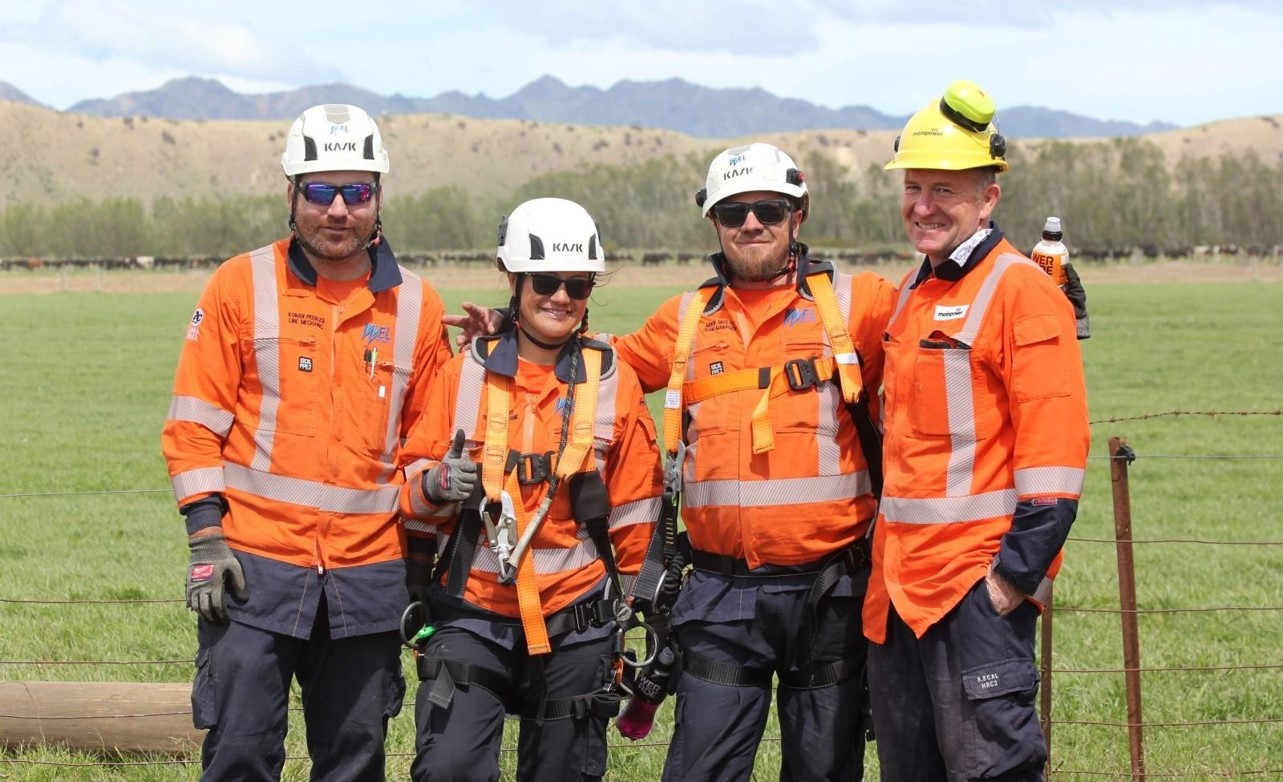
Three WEL Networks crew members join MainPower to restore power